
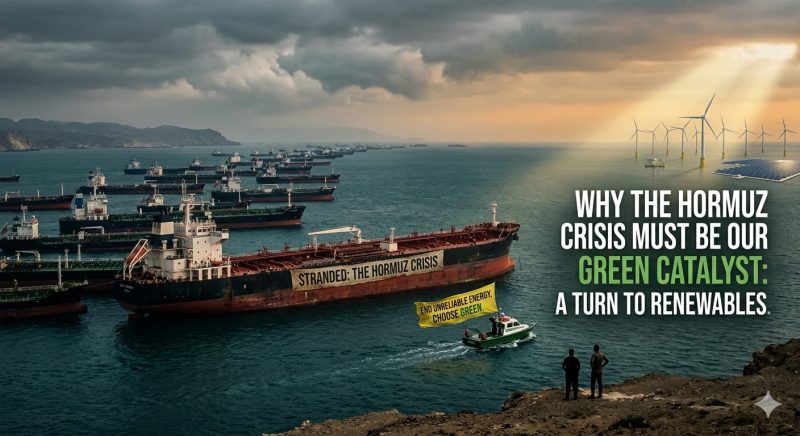
When the gates of the Strait of Hormuz first closed to global trade, the world held its breath, expecting a brief geopolitical standoff. We assumed the disruption would last mere days before our lives returned to normal. But as time progresses and as the recent failure of the Islamabad talks starkly demonstrates that both parties remain unwilling to compromise it has become painfully clear that there is no early resolution in sight. As a sustainability advocate, watching this unfold is both devastating and illuminating. The current global energy crisis is not just a temporary inconvenience; it is a blaring alarm demanding that we fundamentally change our views on non-renewable or, as I prefer to call them, unreliable sources of energy. It is no joke that a single geopolitical dispute can sever a crucial trade route and threaten to plunge the entire world into darkness. Our reliance on fossil fuels has built a global economy balanced on a knife’s edge.
The Myth of Fossil Fuel Security
Currently, we are grappling with the blockade of roughly 20% of the world’s global oil supply. The Strait of Hormuz is the world’s most critical chokepoint, historically seeing over 20 million barrels of oil pass through it daily.
But imagine for a moment if the crisis spreads. What if, tonight, escalating tensions prompt Yemen to completely close off the Bab-el-Mandeb Strait? We would suddenly find ourselves cut off from even more of the world’s oil and liquefied natural gas (LNG) shipments. We are already suffocating from a 20% reduction; a further drop would paralyze global trade.
From our cars to our home appliances, from agricultural supply chains to industrial manufacturing, almost everything we rely on is fueled by “black oil.” This complete dependence on finite, geographically concentrated resources makes us entirely vulnerable to the whims of conflict. Energy sources that can be weaponized overnight cannot, by definition, be considered reliable.
A World Held Hostage: The Global Energy Crisis
The ripple effects of the Hormuz closure are already tearing through the global economy. As global Brent crude prices skyrocket, we are witnessing a repeat of historic energy shocks, but with a modern severity:
- Widespread Inflation: The soaring cost of oil has driven up transportation and manufacturing costs worldwide, leading to crippling inflation in both developed and developing nations.
- European and Asian Vulnerability: Nations heavily reliant on Middle Eastern energy imports are facing strict energy rationing, industrial slowdowns, and soaring utility bills that are pushing vulnerable populations into energy poverty.
Pakistan’s Plight: Paying the Price for Imported Crises
For Pakistan, this geopolitical conflict is translating into an acute domestic nightmare. As a nation already heavily reliant on imported petroleum and LNG to power its grid and fuel its economy, the spike in global oil prices is catastrophic.
- Soaring Import Bills and Inflation: Pakistan spends a massive portion of its foreign exchange reserves on importing energy. With global oil prices surging due to the Hormuz blockade, our import bill has skyrocketed, accelerating inflation and making basic necessities unaffordable for the average citizen.
- The Return of Crippling Load Shedding: As fuel becomes too expensive to procure, power plants are forced to scale back production. This leads to severe, prolonged power outages (load shedding) that disrupt daily life, paralyze small businesses, and cripple industrial output.
- Economic Stagnation: The compounded effect of expensive energy and an unstable power supply stifles foreign investment and halts economic growth, plunging the country deeper into circular debt.
Check Out: Pakistan Building Resilience in the Face of Climate Change
Environment Smart Cities: Building the Future Sustainably
The Sustainable Imperative: Achieving True Energy Independence
In this grim scenario, our path forward is not just to wait for diplomatic miracles; it is to structurally shift our infrastructure toward true sustainability.
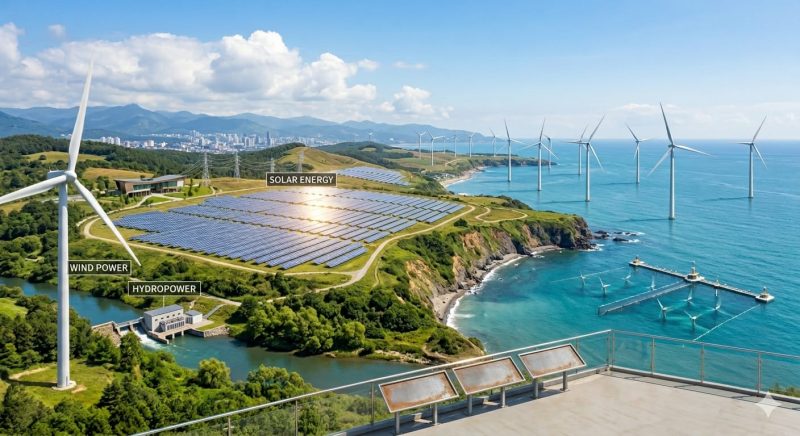
We must decouple our survival from fossil fuels. The base formation of our energy grid must be made clean, decentralized, and resilient. By transitioning rapidly to renewable energy resources hydroelectric, solar, wind, and geothermal power we can harness an unlimited, localized amount of energy.
Solar panels on rooftops in Punjab or wind farms in Sindh cannot be embargoed. The sun and the wind do not pass through geopolitical chokepoints, and no nation can blockade the rivers that power our hydroelectric dams. Transitioning to renewables is no longer just an environmental crusade to protect the integrity of nature; it is now the ultimate issue of national security and economic survival.
We must stop relying on unreliable sources. The era of black oil is proving too costly, not just for our climate, but for global peace and stability. It is time to embrace the clean, infinite, and secure power of nature.
Also Check Out: Why We All Should Move to Clean Renewable Energy
Iran-US-Israel War: Catastrophic Crime for Nature
We hope you all liked this post! Please, comment below if you have any suggestions, comments, or feedback! We #envpk love hearing from our readers! Thanks!
This article is contributed by: M.Arham Irfan is an Environmental Engineering student at the University of Engineering and Technology (UET) Lahore, specializing in sustainable waste management and resource recovery. His work in climate advocacy has earned him recognition as a National Runner-up for the COP 30 Youth Delegation, and he actively contributes to the Climate Catalysts Mentorship Programme, focusing on ESG (Environmental, Social, and Governance) leadership. He is a leading member of Climate Action Forum, a society in UET working on Climate Change.


1 Comment
Really liked how it reframed renewable energy from being just an environmental issue to a matter of economic resilience and national security. The point about Pakistan paying for geopolitical conflicts it didn’t create through inflation, load shedding, and rising import bills hits hard. One thing that could strengthen the argument further is acknowledging transition challenges like grid infrastructure, storage, and financing but overall, this article makes a compelling case that the Strait of Hormuz crisis should be treated as a wake-up call for faster renewable adoption.