
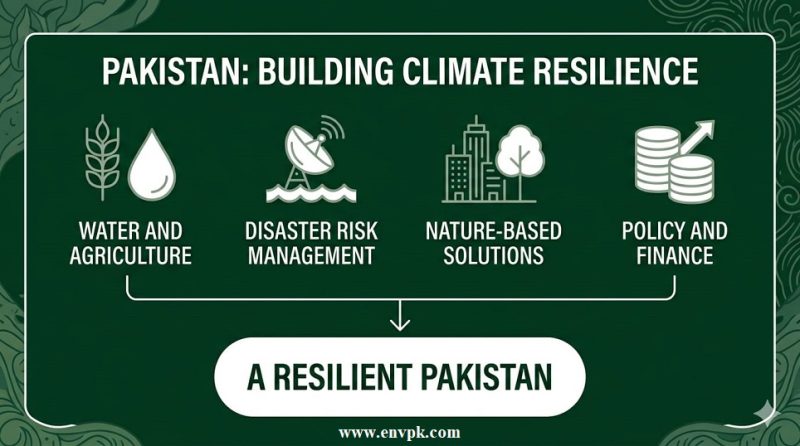
Environmental Adaptation in Pakistan: Building Resilience in the Face of Climate Change
Climate change has emerged as one of the most pressing global challenges of the 21st century, affecting ecosystems, economies, and societies worldwide. Although its impacts are global, they are distributed unevenly, disproportionately affecting developing countries with limited adaptive capacity. Pakistan exemplifies this disparity. Despite contributing less than one percent to global greenhouse gas emissions, it is consistently ranked among the most climate-vulnerable countries (World Bank, 2021).
Over recent decades, Pakistan has experienced a marked increase in extreme weather events, including severe heatwaves, erratic monsoon rainfall, prolonged droughts, and devastating floods. The accelerated melting of glaciers in the northern regions further intensifies these risks, threatening water security and increasing the likelihood of glacial lake outburst floods. These environmental changes extend beyond ecological disruption; they pose serious risks to food security, economic stability, and public health.
In this context, environmental adaptation has become a critical necessity. Adaptation refers to adjustments in natural or human systems in response to actual or expected climatic changes, aimed at reducing harm and enhancing resilience (Government of Pakistan, 2017). While mitigation addresses the root causes of climate change, adaptation focuses on managing its impacts. For Pakistan, where climate risks are already materializing, adaptation is an urgent priority that must be integrated into national development planning.
Understanding Environmental Adaptation
Environmental adaptation encompasses a broad range of strategies designed to reduce vulnerability and enhance resilience to climate-related hazards. These strategies may be anticipatory, involving proactive measures taken before the occurrence of climate impacts, or reactive, involving responses after such events occur (UNDP, 2020).
In Pakistan’s policy framework, adaptation is recognized as a central pillar of climate governance. It includes efforts to strengthen agricultural systems, improve water management, enhance urban resilience, and develop disaster preparedness mechanisms. Effective adaptation requires not only technological solutions but also strong institutional capacity, public awareness, and community participation.
Furthermore, the integration of indigenous knowledge with scientific innovation can significantly improve adaptation outcomes. Local communities often possess context-specific knowledge that enhances the sustainability and acceptability of adaptation strategies, particularly in rural areas.
Climate Change in Pakistan: Facts and Trends
Pakistan’s vulnerability to climate change is supported by both empirical data and observable trends. Rising temperatures have resulted in increasingly frequent and intense heatwaves, particularly in urban centers such as Karachi and Lahore (World Bank, 2021). Changes in precipitation patterns have led to irregular monsoon cycles, increasing the likelihood of both floods and droughts.
The country contains one of the largest glacial reserves outside the polar regions, which are now melting at accelerated rates due to global warming. This phenomenon significantly increases the risk of flooding in downstream areas (ADB, 2021). Simultaneously, Pakistan is facing acute water stress, with declining per capita water availability posing a serious challenge to sustainable development.
Agriculture, which contributes substantially to Pakistan’s GDP and employs a significant portion of the population, remains highly vulnerable to climate variability. Even minor changes in temperature and rainfall patterns can lead to reduced crop yields, thereby threatening food security and rural livelihoods (UNDP, 2020). These interconnected risks underscore the urgency of implementing comprehensive adaptation strategies.
Check Out: What is Climate Change Adaptation? – Importance and Methods
The Sixth Mass Extinction: Can Humans Survive?
Legal and Institutional Framework
Pakistan has made significant progress in developing a legal and institutional framework to address climate change. The Pakistan Climate Change Act, 2017, represents a landmark initiative in this regard, providing a comprehensive structure for both mitigation and adaptation efforts (Government of Pakistan, 2017).
The Act aims to promote climate-resilient development, integrate climate considerations into national policies, and ensure compliance with international agreements such as the Paris Agreement. It established key institutions, including the Pakistan Climate Change Council, the Pakistan Climate Change Authority, and the Pakistan Climate Change Fund.
Adaptation is a central component of this framework. The Act mandates the development of national adaptation plans, promotes climate-resilient agriculture, supports ecosystem conservation, and strengthens disaster risk management systems. Despite these advancements, challenges related to implementation, coordination, and financial constraints continue to limit effectiveness.
Key Areas of Environmental Adaptation in Pakistan
- Environmental adaptation in Pakistan is being pursued across multiple sectors, each addressing specific climate vulnerabilities.
- In agriculture, adaptation strategies include the adoption of drought-resistant crop varieties, improved irrigation techniques, and crop diversification. These measures help stabilize agricultural productivity under changing climatic conditions.
- Water resource management is another critical area, given Pakistan’s increasing water scarcity. Adaptation efforts focus on improving water storage infrastructure, promoting efficient water use, and protecting watersheds to ensure long-term sustainability.
- Disaster risk reduction is essential due to the country’s exposure to natural hazards. The development of early warning systems, strengthening of disaster management institutions, and construction of resilient infrastructure are key components of this approach.
- Ecosystem-based adaptation is gaining prominence as a sustainable strategy. The restoration of forests, wetlands, and mangroves enhances natural resilience while providing ecological benefits. For example, mangroves in coastal regions serve as natural barriers against storm surges and sea-level rise.
- Urban adaptation is also becoming increasingly important. Rapid urbanization has heightened vulnerability to climate risks, necessitating improved drainage systems, expanded green spaces, and climate-resilient urban planning.
Case Study: Pakistan Floods 2022
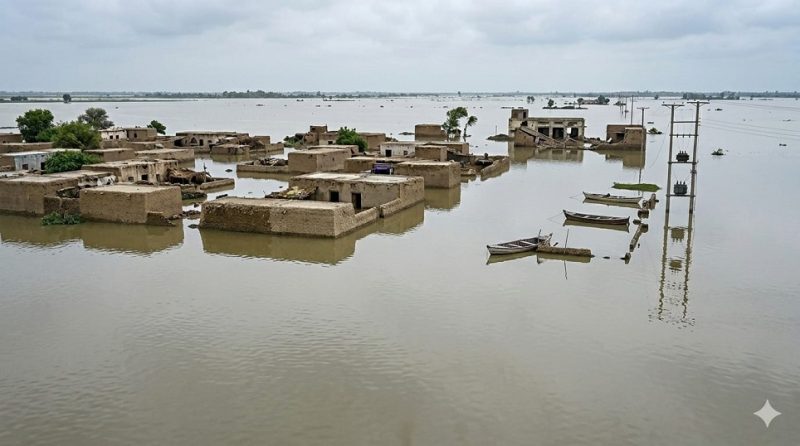
The floods of 2022 represent one of the most catastrophic climate-related disasters in Pakistan’s history. Triggered by unprecedented monsoon rainfall and accelerated glacial melting, the floods affected nearly one-third of the country. More than 33 million people were effected, over 1,700 lives were lost, and economic damages exceeded $30 billion (National Disaster Management Authority, 2022).
The disaster exposed critical weaknesses in infrastructure, land-use planning, and disaster preparedness. Agricultural losses were extensive, leading to food insecurity and economic disruption. Additionally, the displacement of millions of people created severe humanitarian challenges, including the spread of waterborne diseases.
This event highlighted the urgent need for robust adaptation strategies. Investments in resilient infrastructure, improved urban planning, enhanced early warning systems, and ecosystem restoration are essential to mitigate future risks. The floods also underscored the importance of integrating climate resilience into development planning at all levels.
International Cooperation for Climate Adaptation
Climate change is a global issue that necessitates international collaboration. Pakistan has actively engaged in partnerships to strengthen its adaptive capacity through access to technology, expertise, and financial support.
A notable example is the recent Memorandum of Understanding between Pakistan and China in the field of meteorology. This agreement aims to enhance cooperation in weather forecasting, climate monitoring, and scientific research (Pakistan Meteorological Department, 2024).
Through this collaboration, Pakistan can benefit from China’s advanced meteorological technologies and expertise. The agreement includes provisions for data sharing, joint research, capacity building, and the development of improved early warning systems. These initiatives are crucial for enhancing disaster preparedness and supporting climate-sensitive sectors such as agriculture and water management.
Challenges to Environmental Adaptation
Despite policy progress, Pakistan faces several challenges in implementing effective adaptation strategies. Financial constraints remain a major barrier, as adaptation projects require substantial investment. Institutional weaknesses and lack of coordination between federal and provincial governments further hinder progress (ADB, 2021).
Public awareness of climate change is limited, particularly in rural areas, reducing the effectiveness of adaptation initiatives. Additionally, gaps in climate data and research complicate risk assessment and planning. Addressing these challenges requires stronger governance, increased funding, and enhanced public engagement.
Adaptation and Mitigation: A Combined Approach
Adaptation and mitigation are complementary strategies that must be pursued simultaneously. While mitigation focuses on reducing greenhouse gas emissions through renewable energy and efficiency measures, adaptation addresses the impacts of climate change.
Pakistan’s climate policies emphasize a balanced approach that integrates both strategies. This dual approach is essential for achieving long-term environmental sustainability and economic resilience.
Role of Communities and Individuals
The success of adaptation efforts depends significantly on community participation. Individuals can contribute by adopting sustainable practices such as water conservation, tree plantation, and waste reduction.
Local knowledge and traditional practices play an important role in adaptation, particularly in rural communities. Integrating this knowledge with modern scientific approaches can enhance the effectiveness and inclusivity of adaptation strategies (UNDP, 2020).
Conclusion
Environmental adaptation is an urgent necessity for Pakistan as it faces escalating climate risks. While the Pakistan Climate Change Act, 2017 provides a strong policy foundation, effective implementation remains critical. The devastating floods of 2022 illustrate the severe consequences of climate vulnerability, while initiatives such as the Pakistan–China meteorological cooperation agreement highlight the importance of international collaboration.
By investing in resilient infrastructure, strengthening institutional frameworks, enhancing public awareness, and fostering global partnerships, Pakistan can build a more sustainable and climate-resilient future. Adaptation is not merely a response to climate change; it is a strategic pathway toward long-term development and security.
References
- Asian Development Bank. (2021). Climate risk country profile: Pakistan.
- Government of Pakistan. (2017). Pakistan Climate Change Act, 2017.
- National Disaster Management Authority. (2022). Pakistan floods 2022 report.
- Pakistan Meteorological Department. (2024). Pakistan–China meteorological cooperation MoU.
- United Nations Development Programme. (2020). Climate change adaptation in Pakistan.
- World Bank. (2021). Climate risk country profile: Pakistan.
Also Check Out: Climate Change Negligence Etch a Genetic Scar on Pakistan
We hope you all liked this post! Please, comment below if you have any suggestions, comments, or feedback! We #envpk love hearing from our readers! Thanks!
This article is contributed by: Noreen Raza is a civil servant ,served as Forest Officer with a professional degree from the Pakistan Forest Institute (PFI) and currently serveing as Assistant Director (Tech) at the Sindh Environmental Protection Agency (SEPA) in Environment, Climate Change & Coastal Development. She is an IUCN CEESP member, UNITAR and PFI alumna, ISO 14001/45001 certified, and an advocate for climate and biodiversity. Noreen regularly writes and speaks on environmental issues, with publications in English and Arabic internationally.