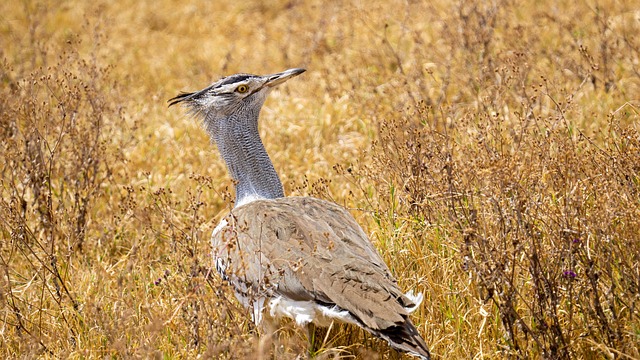
The houbara bustard migrated from Central Asia to Pakistan’s plains and deserts every winter. Unfortunately, the population of this magnificent bird is under serious pressure. This article explores the importance of this species, causes of population decline, and conservation efforts.
Ecological and Cultural Value:
Not only is the houbara bustard essential for biodiversity, but it also has cultural value in Pakistan and other regions. People have been traditionally hunting it and consuming its meat. However, when this activity is carried out uncontrollably, it conflicts with the ecological significance of this bird.
In addition to being an important part of biodiversity, houbara bustard regulates the population of pests, reptiles and small mammals. Agricultural fields are protected since it feeds on rodents that would otherwise damage the crops. For other animals, it serves as a nutritional source, including eagles and falcons. Protecting its habitat also indirectly conserves other desert habitats and fauna.
Check Out: Tracing the Routes of Migratory Birds in Pakistan & Migratory Birds and Flyways of Pakistan – Location, Seasons
Causes of Decrease in Number
- Unregulated Hunting:
The houbara bustard, a fragile visitor, has been facing unregulated hunting for recreation and meat. With no proper or official records, it becomes challenging for the biodiversity conservation authorities to penalize hunters and poachers. Therefore, hunting should only be allowed with strict permits, higher fees and continuous monitoring of species’ status.
2. Habitat Loss and Degradation:
Multiple factors have led to habitat degradation for the houbara bustard. One major culprit is infrastructure and human intervention. People have expanded the agricultural land and utilized the land for road construction and power lines. Another prominent contributor is industrial pollution, which has negatively impacted the quality of the houbara bustard’s habitat by releasing harmful substances. Industrial growth has also resulted in the damage of its nesting sites. Moreover, changes in climate, including precipitation and temperature variation have led to large-scale floods and droughts across the country. Among several species, the houbara bustard is also affected as these conditions leave it with little to no food and water.
Protection Efforts:
To maintain the population of houbara bustard and protect its nesting grounds, the relevant bodies and government are taking major steps. Some notable conservation efforts are:
- Establishment of breeding centers
- Enforcement of bans
- Restriction of hunting permit
- Awareness campaigns about protection
- Sustainable desert conservation
- Tracking of migration routes
Notable organizations working for houbara bustard conservation are World Wildlife Fund Pakistan and International Fund for Houbara Conservation. WWF Pakistan is a part of an extensive protection campaign, advocating for strong enforcement of the poaching ban on the houbara bustard. Also, it focuses on the need for scientific monitoring and research of this bird. Partnership with local communities allows it to promote desert protection. International Fund for Houbara Conservation or IFHC, established in Dubai, has provided financial aid for breeding and release projects of the houbara bustard.
Also Check Out:15 Beautiful Birds That You Must See (Pictures) & Endangered and Critically Endangered Bird Species of Pakistan
Conclusion:
In a nutshell, the crisis facing the houbara bustard population highlights the crucial need for its protection. It struggles with falconry tradition and habitat destruction. With continued efforts and accountability, Pakistan can help remove its name from the list of threatened species.
Resources: https://houbarafund.gov.ae/
This article is contributed by: Quratulain Mansoor, She is a graduate with a Bachelor’s degree in Environmental Sciences. She
has gained practical experience through internships, research and community work with
environmental organizations, which has strengthened her interest in environmental
awareness and conservation.