
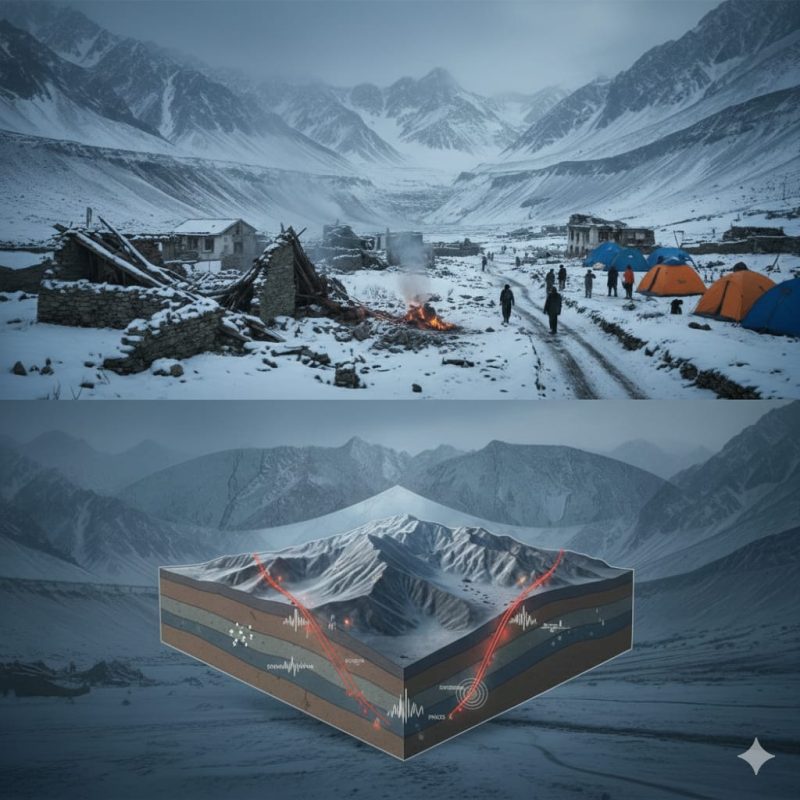
In January 2026, the serene and remote Chapurson Valley in Upper Hunza, Gilgit-Baltistan, was jolted by a series of seismic events that have left the local community in a state of crisis. While Hunza is no stranger to the power of nature, the recent activity specifically a 5.8 magnitude earthquake on January 19, 2026 has caused unprecedented displacement and structural damage in a region already battling the harsh realities of a high-altitude winter.
The Recent Crisis in Chapurson
The earthquake, with its epicenter located near the Yash Kuk Glacier and the village of Zoodkhun, has transformed the daily lives of approximately 2,500 residents. For months leading up to the main shock, the valley experienced “abnormal seismic activity,” including mysterious underground sounds and frequent tremors.
The impact has been devastating:
- Widespread Displacement: Over 250 houses in villages like Zoodkhun, Shitmarg, and Ispanj were destroyed or rendered unsafe.
- Winter Emergencies: With temperatures plummeting to –20°C, displaced families are facing a life-threatening lack of shelter.
- Economic Collapse: Livestock sheds, the backbone of the local economy, have collapsed, leaving animals exposed to the elements.
- Infrastructure Blockage: Landslides triggered by the quake have frequently blocked the only access roads, isolating the valley from essential supplies.
Possible Geological Causes
The frequent shaking of Chapurson is not a random occurrence but a result of its volatile location at the roof of the world.
1. Tectonic Collision
Chapurson lies at the heart of the collision zone between the Indian Plate and the Eurasian Plate. As the Indian plate continues to push northward into Asia at a rate of several centimeters per year, immense pressure builds up. This stress is released through faults, resulting in the earthquakes we see today.
2. Active Fault Lines
The region is crisscrossed by major tectonic features. Specifically, the Upper Hunza Fault and the Main Karakoram Thrust (MKT) are high-angle, seismically active zones. Geologists believe the recent swarm of activity indicates a localized release of stress along these specific fault segments.
3. Shallow Focal Depths
The recent 2026 quake was recorded at a relatively shallow depth (between 10 km and 35 km). Shallow earthquakes are significantly more destructive to surface structures because the seismic energy has less distance to dissipate before reaching buildings.
4. Glacial and Slope Instability
The valley’s geography—steep slopes and proximity to large glaciers like Yash Kuk—makes it prone to “secondary hazards.” Even minor tremors can trigger massive rockfalls and landslides because the mountain slopes are already weathered by frost action and geological shearing.
Proposed Solutions and the Path to Resilience
The situation in Chapurson requires a shift from reactive relief to proactive disaster risk reduction (DRR).
Immediate Relief (The “Humanitarian” Phase)
Winterized Shelters: Ordinary tents are insufficient. The immediate priority must be prefabricated, insulated sheds and “winterization kits” (kerosene heaters, thermal blankets).
Cash-Based Assistance: Due to the difficulty of transporting physical goods over blocked roads, digital cash transfers via mobile banking allow residents to prioritize their own needs while supporting local markets.
Medium-Term Recovery
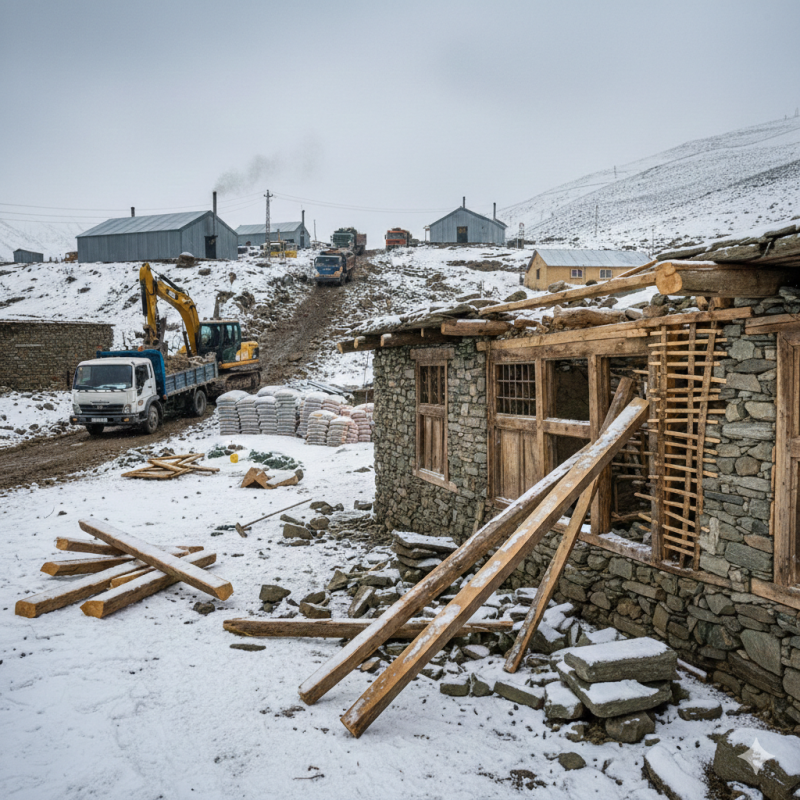
Seismic Retrofitting: Traditional stone-and-mud houses are “death traps” during quakes. Future construction must incorporate Crib-walling or timber-laced masonry, which provides the flexibility needed to withstand tremors without collapsing.
Calamity-Hit Status: The government’s declaration of Chapurson as “calamity-hit” must be followed by long-term tax breaks and subsidized building materials for reconstruction.
Long-Term Strategy: The Resilience Phase
Micro-Zonation Mapping: Geologists should conduct detailed soil and slope stability mapping to identify safe zones for future settlement, moving away from active landslide paths.
Early Warning Systems (EWS): Installing seismic sensors in the valley can provide precious seconds of warning and help experts monitor the underground sounds that often precede larger events.
Community-Based Disaster Management: Training locals in search and rescue is vital, as Chapurson’s remoteness means professional help can take days to arrive.
The people of Chapurson are known for their resilience, but the 2026 earthquakes have pushed that endurance to its limit. Addressing the crisis requires more than just blankets; it demands a scientific understanding of the Karakoram’s changing landscape and a commitment to building back better.
Check Out: Increasing Pollution in Hunza –Causes, Impacts And Solutions
List of 25 Major Glaciers Of Pakistan With Description
We hope you all liked this post! Please, comment below if you have any suggestions, comments, or feedback! We #envpk love hearing from our readers! Thanks!