Every monsoon season, Pakistan faces the challenge of flood relief. This is an issue of water scarcity during every drought period. Every heat wave that Pakistan dreads brings about a drop in crop production. However, one uncomfortable truth that keeps evading our national discourse is that Pakistan is not experiencing isolated climate disasters but is experiencing the collapse of an agricultural system designed for a climate that no longer exists. The agricultural sector contributes almost one-fifth of Pakistan’s gross domestic product, employs more than one-third of the labor force, and sustains millions of rural families.
Floods in 2022 have exposed the vulnerability of the agricultural system in Sindh and Balochistan; the system in Sindh and Balochistan, droughts have kept on threatening western Pakistan, unseasonable rains have affected the sowing season in Punjab, and glacier melting has changed the availability of water in Gilgit-Baltistan.
All these are not environmental issues anymore; these are economic and food security issues that require a structural change. But unfortunately, all these measures are being taken reactively. The government comes up with relief measures after any catastrophe hits the country by offering compensation packages and distributing seeds. Such steps are required but are not enough. Climate-smart agriculture is the only way out.
But it should be noted that most people confuse CSA with just using better seeds or irrigation systems. It is, in fact, a comprehensive strategy that intends to improve agricultural production, make the area resistant to climate change, and reduce environmental degradation. The most important thing about it is that it lends credibility to those policies that take into consideration the environment of the places concerned.
The very example of Pakistan is sufficient to prove that all geographies are unique in their nature.
Check Out: The Green Revolution 2.0: Cultivating a Sustainable Future
A consequence of salinity is that seawater intrusion and floods in Sindh, particularly in the coastal districts of Badin, Thatta, and Sujawal, have brought about a transformation in the whole concept of agriculture. In adapting to the changing climate, the need for salt-resistant crops, mangroves, good irrigation methods, and agricultural/aquaculture systems is vital.
Balochistan is a completely separate challenge. Water scarcity has now come to define the agricultural economy of Balochistan. The reliance on the use of groundwater from tube wells is not sustainable for very long. Agricultural policy at the provincial level should concentrate on community rainwater harvesting, reforestation of watersheds, orchards that resist drought, and drip irrigation.
Groundwater scarcity may well be the least recognized crisis in Punjab, the agricultural core of Pakistan. It is becoming economically unviable to rely on the extraction of groundwater for growing additional crops. There is a need to shift away from conventional resource-intensive farming to precision irrigation and cultivation of alternative crops.
However, Khyber Pakhtunkhwa and Gilgit-Baltistan require climate strategies that are rooted in mountain ecology, sloping land management, agro-forestry, and glacier-based irrigation systems rather than climate strategies suited to irrigated plains.
It is clear that there is a lesson for the future here—climate-friendly agriculture is impossible without different strategies for each province informed by local knowledge, scientific studies, and participation of communities. Fortunately, Pakistan does not have to start its journey from scratch, as other countries suffering from environmental challenges managed to reform their agricultural systems.
The Netherlands has become one of the world’s most productive agricultural producers even with little arable land through the use of precision agriculture and technology. Vietnam has adjusted to the increased sea levels in the Mekong Delta through climate-resilient cropping practices, while Ethiopia has shown that sustainable watershed management can be achieved in tandem with productivity.
What ties all these examples together is not their wealth, but their policy continuity and investments in research and planning.
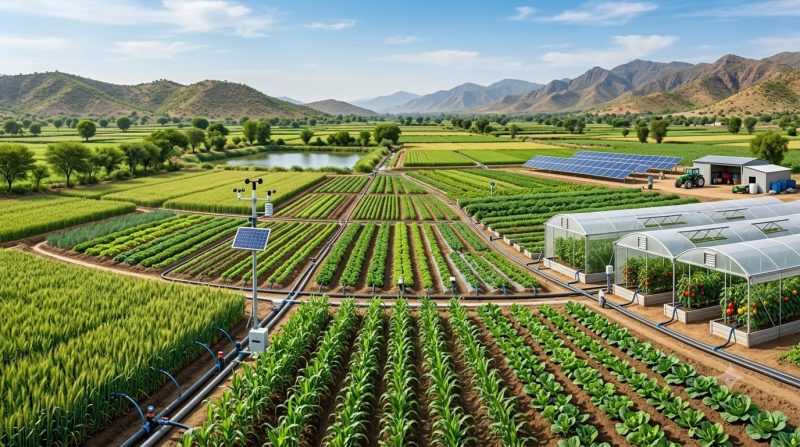
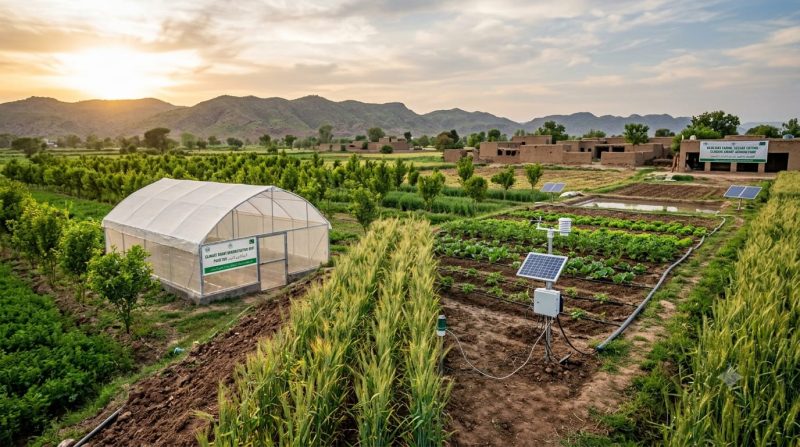
It is not a lack of financial resources that makes Pakistan weak on this front. Even though the understanding of climate science has progressed a lot, millions of farmers in Pakistan continue to rely on their planting calendar and oral traditions of weather forecasting. Access to information about climate change is poor among small farmers in Pakistan. This initiative represents one of the biggest opportunities for Pakistan. Picture every district having a climate agriculture service center to give weather forecasting, irrigation advice, pest warnings, soil health information, and marketing knowledge to farmers using mobile technology. It would cost much less compared to the continuous funding for disaster recovery efforts.
At the same time, we should consider the potential that lies in our youth. They have been considered only beneficiaries but not agents of the agricultural revolution in Pakistan. Modern agriculture has become less attractive for educated youth due to low productivity and lack of opportunity in it.
Universities can create climate innovation farms where students work alongside farmers to experiment with adaptive technologies. Young entrepreneurs must be encouraged to innovate climate solutions for rural areas, while women, who form a sizeable part of the agricultural labor force in Pakistan, must have equal access to funding, extension services, and technologies.
But nothing can work without reinventing the state’s approach to investing public funds.
Pakistan invests huge amounts in rebuilding itself after climate crises hit but much less in climate preparedness through crop insurance, green agriculture lending, renewable-energy irrigation systems, ecosystem restoration, and resilient value chains.
A policy innovation that deserves serious national attention is that of Climate Resilience Zones.
Such areas would be designed as zones wherein provincial governments, universities, research institutes, farmers, private companies, and development partners would work together to develop integrated climate-smart agriculture programs. Unlike one-off pilots of existing technologies, such zones will act as live laboratories in which innovative practices, including precision irrigation and regenerative agriculture, can be tested, validated, and rolled out country-wide.
Over the years, the Pakistani government has announced various climate initiatives; however, their implementation continues to be fragmented across institutions. The creation of climate resilience zones might serve as that missing institutional link in the agricultural sector.
In essence, climate-smart agriculture is not only about crop protection. It is also about ensuring food security and economic stability of the nation.
Climate change is revolutionizing the fundamentals of agriculture around the globe. Pakistan can choose to react to crises time and again or design its future in agriculture before the next crisis strikes. National resilience will not be measured by how many camps for relief have been created following the next flooding. What will matter is how much the nation has done in terms of preparation so that fewer farmers end up needing the camps.
Also Check Out: Pakistan Building Resilience in the Face of Climate Change
We hope you all liked this post! Please, comment below if you have any suggestions, comments, or feedback! We #envpk love hearing from our readers! Thanks!
This article is contributed by: Aftab Hameed Mirani.
Former Research Intern, Islamabad Policy Research Institute (IPRI)
Coordinator, Youth Engagement & National Youth Initiative
Human Development & Peace Organization (HDPO)