Illegal Dumping and Disposal of Pesticide Waste and It’s Solution with Sindh Environmental Protection Act-2014
Beneath the fertile soil of Sindh, a toxic time bomb is ticking. While the province’s agricultural output is the backbone of its economy, a hazardous practice threatens the health of its people and the environment. The improper disposal of pesticide waste simply dumping leftover chemicals on fields has become a silent crisis, one that is poisoning the land, contaminating water, and directly violating the law.
For decades, the lack of awareness and the absence of proper disposal mechanisms have led farmers and the agriculture department to treat fields as dumping grounds. This has left tonnes of obsolete and highly toxic chemicals to leach into the earth.
The issue is not new, but its consequences are becoming more apparent. Historically, thousands of tonnes of banned and expired pesticides, have been stockpiled across Sindh . In 2009, a report by the Sindh Environmental Protection Agency (SEPA) identified a single site in a populated area of Nawabshah storing approximately 48,000 kilograms of discarded pesticides, posing an immediate threat to residents and a school nearby.
These chemicals do not simply disappear. Experts warn that groundwater across the province is becoming increasingly toxic due to these pollutants. Scientific research Studies have found that underground water in parts of Sindh has been poisoned, a crisis exacerbated by the unchecked use and disposal of agrochemicals. This water, once a lifeline for drinking and irrigation, is now a source of disease, contaminating the food chain and leading to health hazards for farmers and their families.
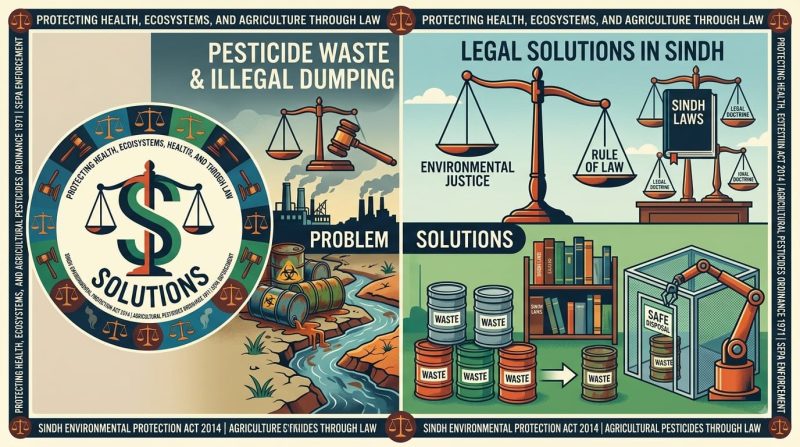
The Sindh Environmental Protection Act -2014, explicitly addresses this malpractice. Under Section 12 and 13 of SEP Act-2014, the handling, import, collection, unsafe storage, transportation and disposal of all types of hazardous waste is strictly prohibited. The act empowers the Sindh Environmental Protection Agency (SEPA) to enforce standards and ensure the safe disposal of hazardous material as per Sindh Hazardous Substance Rule 2014.
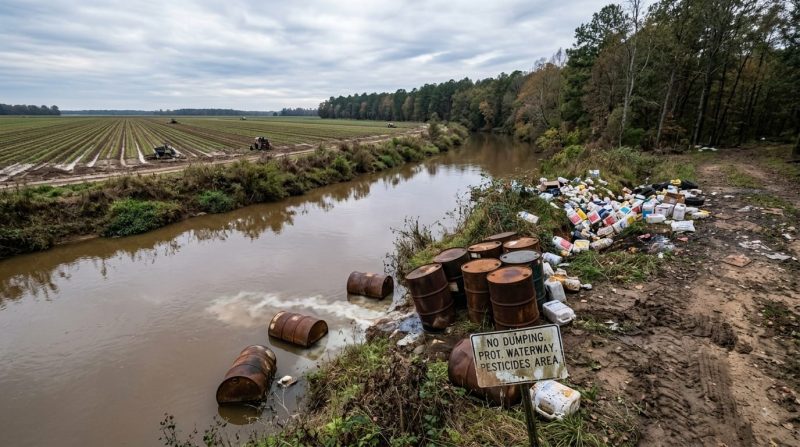
The practice of dumping waste at the field causes a cascade of environmental damage:
- Soil Degradation: The “wrong application” of pesticides and fertilizers is killing the soil, reducing its natural fertility and productivity lifecycle.
- Water Contamination: Rain and irrigation wash these chemicals into the groundwater, a primary source of drinking water. This has led to the presence of arsenic and other heavy metals in water sources, posing severe cancer risks to the population.
- Health Impacts: Pesticides are harmful to the nervous system, liver, and kidneys, and are linked to reproductive development defects and cancers . Workers in the fields, particularly women picking cotton, are exposed directly, contracting skin diseases as the poison permeates their body cells.
Check Out: What is Pesticide Pollution? Causes, Effects and Solutions
Poisonous Pesticides: Harmful Impacts on Humans and Nature
Addressing this crisis requires a multi-pronged strategy that focuses on solutions, collaboration, and a healthier future
The SEP Act 2014 provides a strong framework for responsibly managing hazardous waste across the province. By following the Sindh Hazardous Substance Rules 2014, we have a clear opportunity to move beyond unsafe open-yard dumping and toward scientific, environmentally sound disposal methods.
To build modern disposal capacity, Pakistan is advancing its infrastructure by investing in state-of-the-art incineration facilities capable of reaching the required 1,200–1,500°C temperatures. Additionally, as a proud party to the Stockholm Convention, the nation can access international technical and financial assistance to safely eliminate toxic chemicals turning a challenge into a global partnership for environmental protection.
SEPA is empowered to ensure full compliance with the 2014 Act, working collaboratively with all departments including Agriculture to uphold safe storage and disposal standards. The Agriculture department should take a proactive role by training farmers in safe usage practices and viable disposal alternatives, equipping them with knowledge that protects both their livelihoods and the Agriculture department should also be bound to comply with SEP Act -2014 and its rules and regulations made there under
This is also a springboard for positive change: we have the chance to reduce chemical dependency and accelerate the shift toward sustainable, organic farming practices. This transition will restore soil health, improve crop resilience, and safeguard water resources for generations to come.
A Clear Commitment to Health and Prosperity
The Government of Sindh is committed to enforcing the law not as a burden, but as a promise. By acting decisively now, we choose a future of clean fields, safe water, and a thriving population. The path is clear: enforce the law, embrace innovation, and cultivate a healthier, more sustainable Sindh.
You Might Be Interested :The Green Revolution 2.0: Cultivating a Sustainable Future
We hope you all liked this post! Please, comment below if you have any suggestions, comments, or feedback! We #envpk love hearing from our readers! Thanks!
This article is contributed by: Noor Ahmed Nahyoon (Assistant Director (Tech) Sindh Environmental Protection Agency Government of Sindh, Hyderabad )