The Earth is no longer whispering warnings. It is screaming. In 2025, global carbon dioxide emissions have soared to a record-breaking 37.1 billion tons, defying every climate accord and summit declaration. What was once predicted is now reality, and worse. The ice melts faster, the oceans warm deeper, and the winds howl stronger. Somewhere between conferences and carbon credits, we forgot that nature does not negotiate.
It is now widely understood that carbon emissions alter temperatures, but less understood is how these changes unravel the intricate tapestry of Earth’s climate, especially through our oceans. The melting of Arctic ice, the erratic surges of tropical cyclones, and the slow motion breakdown of the Atlantic’s great conveyor belt, known as the Atlantic Meridional Overturning Circulation (AMOC), are not isolated events. They are deeply interwoven, forming a self-reinforcing cycle that, if left unchecked, could spell systemic collapse.
Let’s begin at the heart of the matter. Ocean currents are Earth’s arteries, carrying heat, nutrients, and memory across continents and centuries. They come in two major types: surface and deep. Surface currents are sculpted by wind and the Coriolis effect, forming rotating gyres that regulate regional climates. Deep currents, however, are powered by differences in water density caused by temperature and salinity—what scientists call thermohaline circulation. Together, they form a global oceanic conveyor belt that redistributes warmth, supports marine ecosystems, and acts as one of the planet’s largest carbon sinks.
But this once reliable machinery is stalling.
Check out: Fiscal Decentralization: A Path to Environmental Sustainability or a Victim of Geopolitical Risks?
In the Atlantic, the Gulf Stream carries warm waters northward, moderating the climates of Europe. Meanwhile, the Labrador and Canary Currents bring cooler waters south, balancing salinity and temperature. This equilibrium allows the AMOC to function like a planetary conductor. But today, the symphony is turning into cacophony.
The reason? Freshwater.
Massive volumes of glacier melt from Greenland and the Arctic are flooding the North Atlantic, diluting its salinity. And freshwater is lighter. It doesn’t sink like cold, salty water does. This interferes with the vertical push and pulls those powers the AMOC. A recent 2024 study by the Ditlevsen siblings, a climatologist duo from Denmark, warned that AMOC is closer to collapse than previously imagined, possibly within our lifetime. Peter Ditlevsen called it “an irreversible weakening not seen in 12,000 years.” Susanne Ditlevsen, affiliated with the Niels Bohr Institute, stated bluntly: “If emissions continue as they are, collapse is not a matter of if but when.”
This breakdown is already manifesting in the shifting Gulf Stream. New satellite data shows that since 2008, warm, less saline water has been intruding farther north into the Northwest Atlantic Shelf, displacing the colder, denser water that once sank. The result is a rising sea surface height and escalating marine heatwaves. The ecological consequences are profound: fishery disruptions, coral bleaching, and coastal flooding, all accelerating faster than our capacity to adapt.
But it doesn’t stop there. The atmosphere too is being twisted into strange shapes. Enter Rossby waves, planetary waves that can, under the influence of Arctic warming, become amplified through a phenomenon called Quasi Resonant Amplification. Like a struck tuning fork vibrating uncontrollably, these waves become trapped in the jet stream, locking in heat domes over continents. That’s how we got the deadly heatwaves in Europe (2022), Canada (2023), and China (2024). These aren’t seasonal anomalies. They are systemic symptoms.
It is a vicious feedback loop. Warming amplifies wave resonance, which in turn intensifies heatwaves, leading to more ice melt, more freshwater runoff, more AMOC disruption, until the loop feeds itself beyond reversal.
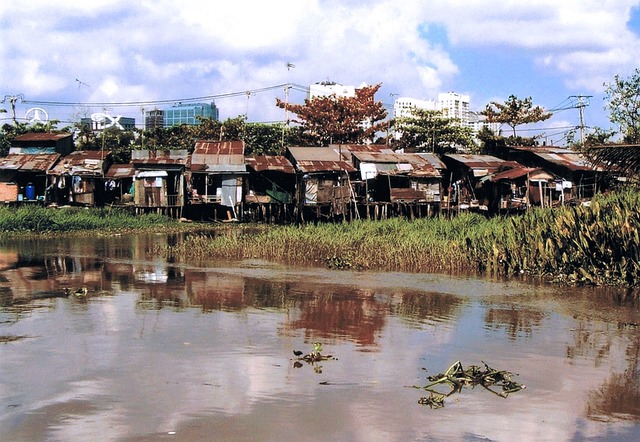
In Pakistan, we have felt this chaos firsthand. The floods of 2022 and 2023 displaced millions, leaving behind shattered homes, devastated crops, and a national economy teetering under the weight of climate induced trauma. And yet, Pakistan is just a microcosm of a global tragedy.
What makes this all the more infuriating is the performative nature of climate policy. Nations speak of intergenerational equity and sustainable futures, while quietly subsidizing fossil fuels. Frameworks like market environmentalism claim to balance economy and ecology, but in reality, they tip the scale toward profit, especially when disaster costs are underestimated.
A pivotal study from the Potsdam Institute for Climate Impact Research in late 2023 highlighted this distortion. Cyclones, it showed, cause long lasting economic scarring-something absent from most climate models. When factored in, the true Social Cost of Carbon jumps from $173 to $212 per ton. That’s a 20 percent underestimation, enough to misguide global climate investments. And cyclones are just one facet. Factor in rising seas, deadly heat, droughts, and ecosystem loss, and the real price tag of inaction likely reaches trillions.
This is not simply about dollars. It’s about survival and clarity.
Check out: Climate Change Crisis: Rethinking Carbon Accountability
We must stop pretending that the climate crisis is coming. It’s here. The AMOC is slowing. The oceans are overheating. Atmospheric wave patterns are mutating. And our economic models are still playing catch up. The hour for action is not tomorrow. It is now.
We stand at a crossroads. One road leads to more delays, more summits with fewer teeth, more “net zero by 2050” promises. The other demands a paradigm shift, a complete rethinking of our environmental, political, and economic systems. We must price carbon accurately, strengthen global cooperation, and build resilience for a planet in flux.
There is no exit strategy from Earth. The feedback loop is closing in.
And yet, with courage and coordination, we can still rewire the future.
Also Check Out: Role of Local Communities In Environmental Reform Planning
Environmental Protection Vs. Economic Development Conflict
This article is contributed by: Mohammad Zain , He is a writer and researcher. He has a background in English Literature and International Relations. He possess deep interests in geopolitics, non traditional security and the emerging technologies.