The global climate is shifting. Meteorologists and scientific bodies, including the World Meteorological Organization (WMO) and NOAA have confirmed that El Niño is officially here.
Ocean temperatures in the central and eastern Pacific have surged well past critical thresholds. Current climate models project that this event is rapidly strengthening, with a high likelihood of becoming one of the most powerful El Niño episodes recorded this century. Because El Niño acts as a massive thermal engine for the planet, its arrival triggers a domino effect across global weather systems. It directly alters everything from the price of groceries to the severity of local wildfire seasons.
What Exactly is El Niño?
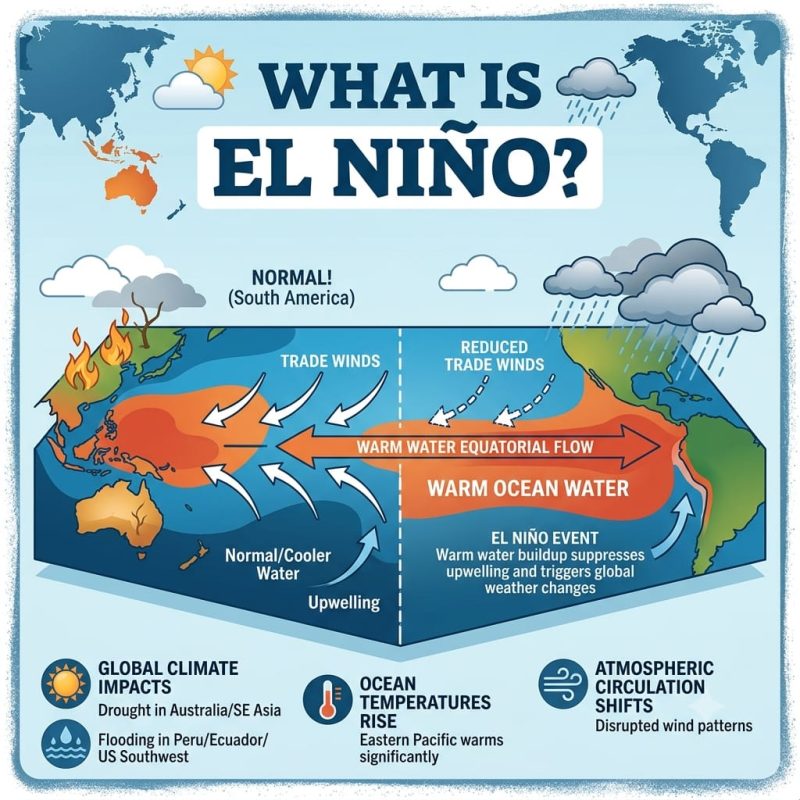
At its core, El Niño is the warm phase of a naturally occurring climate cycle known as the El Niño-Southern Oscillation (ENSO). Under normal conditions, steady equatorial trade winds blow from east to west across the Pacific Ocean, pushing warm surface water toward Asia and Indonesia. This allows cooler, nutrient-rich water to rise up from the deep ocean along the coast of South America—a process known as upwelling.
Check Out: Climate Change, Extreme Weather Events-Causes And Impacts
During an El Niño event, this entire system stalls or reverses:
- Weakened Trade Winds: The atmospheric trade winds slacken or blow eastward.
- The Warm Wave: Without strong winds pushing it westward, a massive reservoir of warm water surges backward toward South America.
- Atmospheric Coupling: The atmospheric jet streams shift their paths in response to this redistributed ocean heat.
- This ocean-to-atmosphere feedback loop alters the track of storms and weather systems across the globe.
How It Effects Us: The Global Consequences
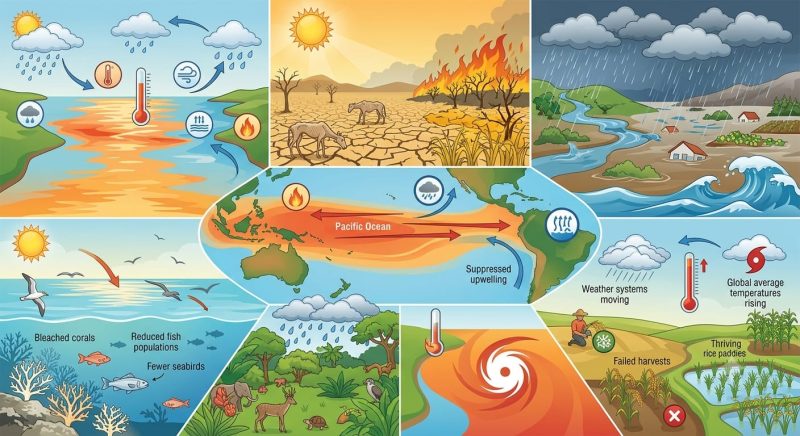
El Niño does not cause identical weather everywhere. Instead, it creates extreme climate splits, bringing torrential rains and flooding to some regions while plunging others into severe drought.
1. Agriculture and Food Security
- The primary human impact of El Niño is felt at the dinner table. As the weather pattern intensifies, it disrupts critical agricultural zones:
- Severe Droughts: South Asia, Southeast Asia, Australia, Central America, and southern Africa face heavily reduced rainfall. Key crops like rice, maize, and beans are vulnerable to failure, raising risks of food insecurity.
- Deluges and Saturated Soil: Conversely, parts of East Africa, the southern United States, and southeastern South America face excessive rainfall. While moisture sounds beneficial, extreme downpours saturate the ground, cause soil erosion, wash away nutrients, and flood standing crops.
2. Extreme Heat and Wildfires
- El Niño releases immense amounts of stored ocean heat into the atmosphere. This surge acts as fuel on top of existing global warming trends. Forecasters note that global temperatures are spiking sharply, putting the current period on track to challenge historical temperature records.
- Extended heatwaves maximize the risk of devastating wildfires in drying regions like the western United States, Australia, and parts of Europe, while placing intense stress on public health and power grids.
3. Energy and Economic Disruptions
- The climate shift carries a heavy economic price tag. In nations heavily reliant on hydropower (such as Colombia and Brazil), low river flows force a shift to expensive, carbon-heavy fossil fuels to prevent blackouts. Furthermore, infrastructure damage from inland flooding and coastal erosion demands massive financial reallocations for disaster relief and rebuilding efforts.
4. Health Risks and Disease Outbreaks
Public health officials monitor El Niño closely due to two distinct climate-driven threats:
- Vector-Borne Diseases: As rivers dry up into stagnant pools in drought zones, or as heavy rains leave standing water in flood zones, mosquito populations swell. This creates ideal environments for spikes in illnesses like dengue, Zika, and malaria.
- Waterborne Illnesses: Severe flooding frequently overwhelms local drainage systems, contaminating fresh water supplies and driving increases in gastrointestinal diseases.
The Silver Lining?
If there is any positive news, it is in the Atlantic Ocean. The atmospheric wind shear generated by El Niño typically suppresses hurricane development in the Atlantic basin. This often leads to a below-normal hurricane season for the eastern United States and Caribbean islands, offering a temporary reprieve from severe tropical storms. Conversely, it tends to fuel a more active hurricane season in the central and eastern Pacific.
Preparing for the Shock
A powerful El Niño is no longer a distant forecast it is actively unfolding. The global impacts will likely peak in the coming winter months and persist well into next year. Because modern meteorology provided months of advanced warning for this cycle, governments, agricultural sectors, and humanitarian agencies have a critical window to implement early warning systems, secure water reservoirs, and fortify infrastructure against the oncoming climate shift.
Also Check Out: Climate Change Crisis: Rethinking Carbon Accountability
We hope you all liked this post! Please, comment below if you have any suggestions, comments, or feedback! We #envpk love hearing from our readers! Thanks!