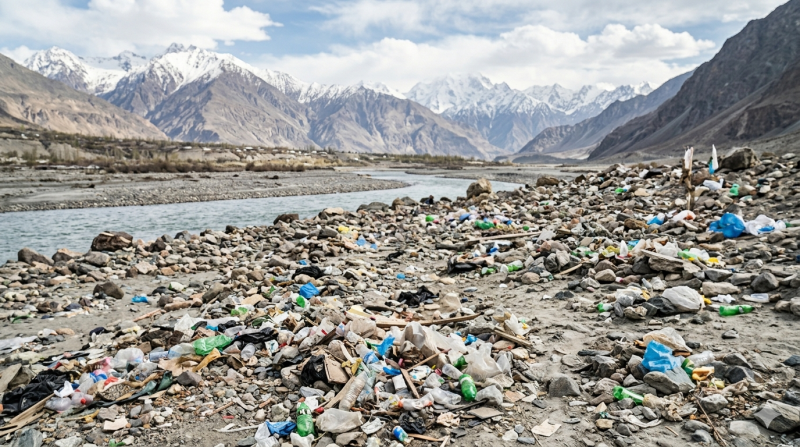
There is a distinct magic that sweeps over you when you first enter Skardu. Surrounded by the towering, jagged peaks of the Karakoram Range, with the Indus River winding aggressively through a high-altitude desert, it feels like another world. Travelers head here to escape the concrete, noisy chaos of Pakistan’s major cities.Yet, on a recent journey through the valley, that illusion of untouched paradise was completely shattered. The heartbreaking reality is that Skardu and its surrounding valleys are rapidly turning into high-altitude dump sites.
The trash crisis is no longer confined to the main bazaars of Skardu town; it has aggressively bled into the most remote and scenic corners of the region. Take Chunda Valley, for instance. Known for its panoramic, sweeping views of the entire Skardu floor and its quiet, terraced fields, the climb up is supposed to offer serene isolation. Instead, the edges of the jeep tracks and the grassy viewpoints are marred by discarded juice boxes, plastic bags, and cigarette butts.
Further away in Ghanche district, Saling Khaplu offers a stunning contrast where the river widens alongside rocky riverbeds and historical forts. Yet, walking along the banks of the water in Saling reveals a depressing sight: plastic wrappers wedged tightly between river stones and empty oil canisters floating in streams. The story repeats itself in the dreamlike Soq Valley. Famous for its crystal-clear, deep-blue trout streams and pastures that look straight out of a painting, Soq is actively being suffocated. Picnic spots along the water are littered with leftover food packaging, disposable plates, and discarded plastic water bottles left behind by tourists who seemingly cared more about their Instagram photos than the environment they were standing in.
And then, there is Kachura. Don’t even ask about Upper and Lower Kachura Lakes, the crown jewels of Skardu tourism. What should be an ethereal experience of reflective emerald waters and quiet boat rides has devolved into a commercialized circus of litter. The banks are heavily strewn with single-use plastics, and the paths leading down to the water are lined with mini-mountains of garbage overflowing from inadequate bins or simply tossed into the bushes by passing crowds.
This is ecological vandalism, plain and simple. It isn’t just an eyesore; it is an environmental disaster. Skardu’s wildlife, its fragile soil quality, and its downstream water sources, which millions of people depend on, are being poisoned by non-biodegradable waste.
Check Out: Increasing Pollution in Hunza –Causes, Impacts And Solutions
The Way Forward: How to Fix Skardu’s Garbage Crisis
We cannot fix this by simply pointing fingers; it requires a massive, aggressive overhaul combining strict governance, local community management, and a radical shift in tourist behavior. Here are the most effective solutions to clean up Skardu:
1. Implement a “Trash Tax” and Check points at Entry Gates
- The Gilgit-Baltistan government should introduce mandatory environmental check-posts at major entry points, such as the Skardu Airport and the Karakoram Highway entry zones.
2. Empower the Gilgit-Baltistan Waste Management Company (GBWMC)
- Currently, formal waste collection struggles outside the main municipal areas of Skardu town. The GBWMC needs to be financially equipped to extend its reach.
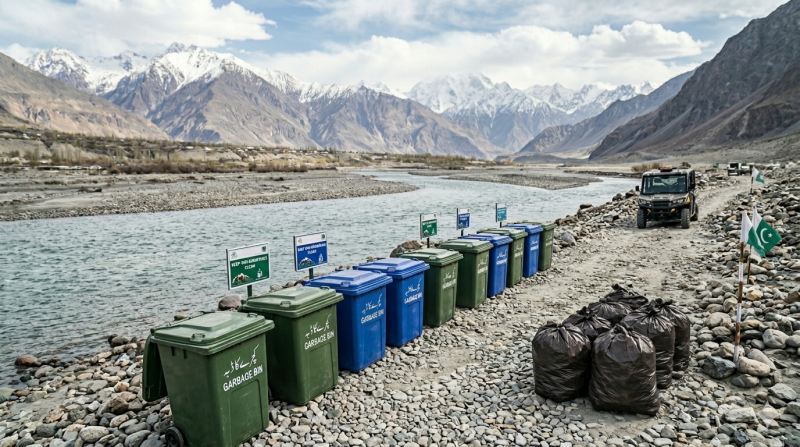
- Regular Routines: They must place heavy-duty, wildlife-proof garbage bins at spots like Saling and Chunda Valley and establish a strict weekly or bi-weekly collection schedule.
- Public-Private Partnerships: Hotels and local boat operators at Kachura Lake must be legally obligated to pay a monthly cleanliness fee to subsidize these extended collection routes.
3. Move Toward a Strict Single-Use Plastic Ban
- Following the model of eco-sensitive zones globally, Gilgit-Baltistan must aggressively phase out single-use plastics.
- Local shops, hotels, and tour operators should be banned from distributing thin polythene bags.
- Visitors should be encouraged to bring reusable flasks, and local enterprise can be boosted by introducing filtered water refilling stations across tourist hubs.
4. Enforce Heavy, On-the-Spot Fines
- Signboards pleading with tourists to “Keep Pakistan Clean” do not work. What works is a hit to the wallet. Local tourism police should be deployed at high-traffic sites like Kachura and Soq Valley with the legal authority to issue heavy, non-negotiable fines for littering.
If we don’t act now, the very landscapes that make Pakistan’s northern areas world-famous will be irreversibly ruined. Tourism should give life to Skardu, not take it away.
Check Out: Transforming Gilgit: Sustainable Development and Conservation
Are Waste-to-Energy Plants Suitable for Gilgit Baltistan?
We hope you all liked this post! Please, comment below if you have any suggestions, comments, or feedback! We #envpk love hearing from our readers! Thanks!