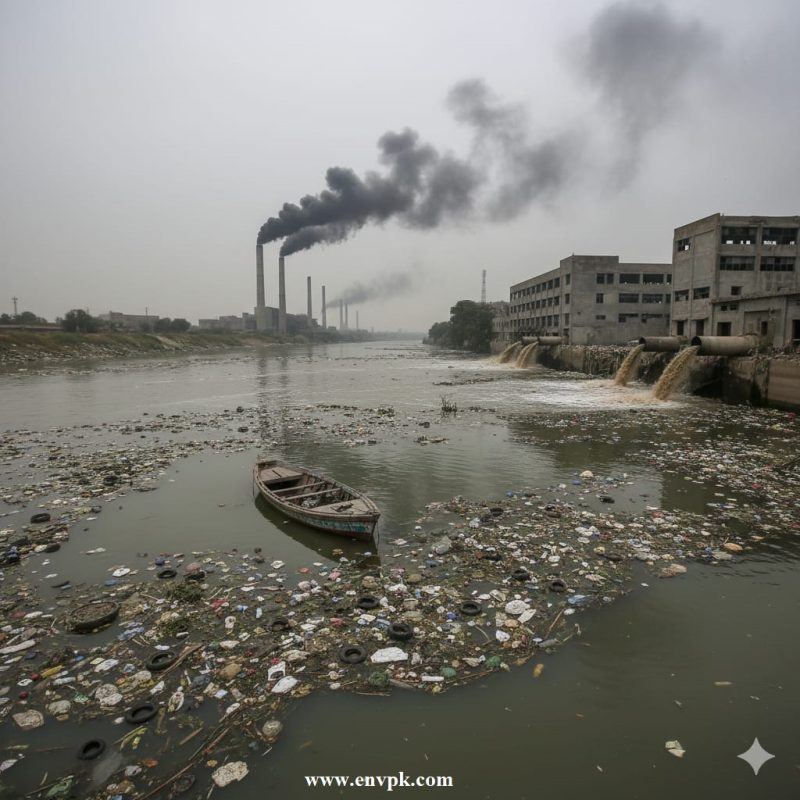
Pakistan’s rivers carry more than just water. Along with sewage and industrial waste, they now carry medicine residues and plastic debris. This mix is quietly helping the dangerous bacteria grow stronger and harder to treat.
Antibiotic resistance is usually discussed as a hospital issue. In reality, it is also an environmental issue. In Pakistan, polluted water, plastic waste, and the misuse of antibiotics are feeding into the same cycle, with serious consequences for public health.
Across Pakistan, about 80% of wastewater flows into the rivers and streams without treatment. This includes household sewage, hospital waste, and runoff from pharmaceutical use. Antibiotics do not disappear once they reach water. They stay behind in small amounts. These low doses are enough to change bacteria. Instead of killing them, they help bacteria adapt. The weakest die, while the strongest survive and multiply. Over time, these bacteria learn how to resist medicines that once worked.
Water samples from cities like Lahore, Karachi, and Islamabad have shown that bacteria are developing resistance to various antibiotics. These microbes do not stay confined to rivers. They reach people through drinking water, vegetables irrigated with wastewater, and fish caught from polluted sources.
Check Out: The Invisible Chemicals Polluting Pakistan’s Drinking Water
Seaweed: A Sustainable Water Pollution Solution for Pakistan
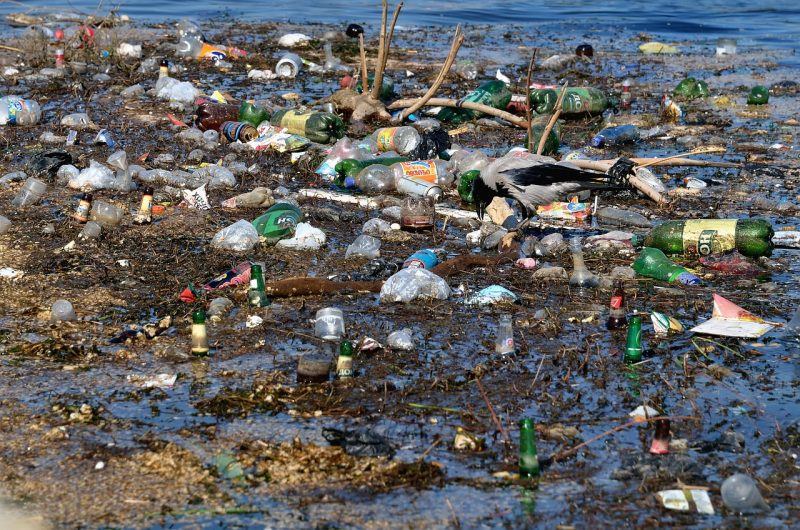
Plastic pollution makes this situation worse. Pakistan produces around 20 million tonnes of plastic each year. Only a fraction of it is recycled, andlarge amounts of plastic waste end up in Pakistan’s waterways. In water, plastic becomes more than just litter. Bacteria stick easily to plastic surfaces. Once attached, they form thin layers called biofilms. Inside these layers, bacteria live close together, which allows them to exchange genetic material, including the genes that cause antibiotic resistance.
In simple terms, plastic acts like a shared shelter where bacteria meet and trade survival skills. A plastic bag or bottle floating in a river can carry resistant bacteria from one place to another. As plastic breaks down into smaller pieces, those bacteria spread even more widely.
Studies have found that plastic surfaces in polluted water often carry more resistant bacteria than the water itself. This means that plastic waste is directly helping in the growth and spread of resistance.
The impact of this environmental problem shows up in clinics and hospitals. Doctors are seeing more infections that no longer respond to common antibiotics. Diseases that were once easy to treat now require stronger, more expensive drugs. Children are especially vulnerable. When resistant bacteria enter the body through unsafe water or food, treatment options become limited. For many families, this means longer illness, higher costs, and greater risks. The burden is not only medical. Farmers suffer when irrigation water is contaminated. Fisheries decline as rivers become more polluted. What starts as environmental neglect slowly turns into a public health issue.
Pakistan often treats water pollution, plastic waste, and antibiotic resistance as separate issues. In reality, they are tightly linked. Polluted water carries antibiotics and bacteria. Plastic gives those bacteria a place to survive. People are exposed through food and water. This cycle repeats every day.
Solving only one part of the problem will not work. Wastewater treatment must be a priority, especially for hospitals and industries. Even basic treatment systems can reduce harmful bacteria and drug residues before they reach rivers.
Plastic waste must be reduced through better collection and keeping trash out of waterways. Fewer plastics in water means fewer places for resistant bacteria to grow. Antibiotics must also be used more carefully, both in people and in animals. Unused medicines should be disposed of safely instead of ending up in drains.
Antibiotic resistance is no longer a distant threat. It is already developing in polluted canals, rivers, and drains across Pakistan. Clean water is not just an environmental goal. It is one of the strongest protections we have against future crises. If Pakistan wants to control antibiotic resistance, protecting its water systems must be part of the solution.
Also Check Out: Water Pollution In Pakistan- Causes, Effects and Solutions
Impact of Microplastic Pollution on the Environment
This article is contributed by: Maryam Latif, Maryam is a microbiology graduate who is passionate about climate change, sustainable solutions and environmental health.
References:
Wastewater Treatment in Pakistan: Issues, Challenges and Solutions