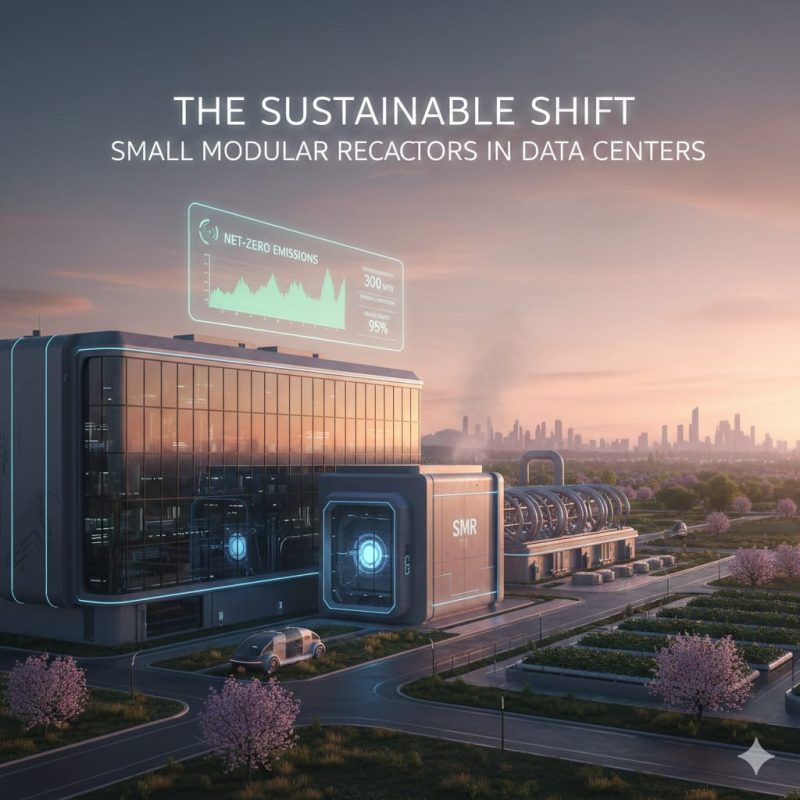
The digital age is currently grappling with a profound paradox: the very technologies designed to optimize our world, Artificial Intelligence, cloud computing, and the Internet of Things are consuming energy at a rate that threatens global climate goals. Data centers, the physical backbone of this digital revolution, are no longer just warehouses for servers; they are industrial-scale energy consumers. To reconcile this hunger for power with environmental stewardship, the industry is turning toward an innovative nuclear solution: Small Modular Reactors (SMRs).
The Energy Crisis of the AI Era
As we move through 2026, the demand for data center capacity has reached an inflection point. The transition from simple data storage to complex AI model training and real-time inference has caused power requirements to skyrocket. A single modern data center can draw as much electricity as 25,000 households.
Traditionally, data centers relied on a mix of grid power and renewable energy certificates. However, solar and wind, while clean are intermittent. To maintain 99.999% uptime, data centers need baseload power: a constant, unwavering stream of electricity. When the sun sets or the wind dies down, many facilities revert to fossil fuel backed grids. This is where SMRs enter the frame as a potential environmental holy grail.
What are SMRs?
Small Modular Reactors are advanced nuclear reactors with a power capacity of up to 300 MW per unit roughly one third the size of traditional nuclear plants. Their modular nature means they are factory built and transported to a site for assembly, rather than being massive, bespoke construction projects.
For the environment, the Small in SMR is as important as the Nuclear. Their compact footprint allows them to be co-located with data centers, reducing the need for sprawling new transmission lines that disrupt local ecosystems and cause energy loss during transit.
You might be interested: Environment Smart Cities: Building the Future Sustainably
Environmental Benefits: Beyond Zero Emissions
The primary environmental argument for SMRs is their carbon profile. Like traditional nuclear power, SMRs produce near zero greenhouse gas emissions during operation. However, their specific design offers several unique ecological advantages:
- Land Use Efficiency: SMRs require significantly less land per megawatt generated compared to solar or wind farms. A solar array providing the same 24/7 power as a 300 MW SMR would require thousands of acres of land, often resulting in habitat fragmentation.
- Water Conservation: One of the greatest environmental strains of data centers is water consumption for cooling. Modern SMR designs, such as high-temperature gas-cooled reactors or molten salt reactors, can utilize dry cooling or closed-loop systems more effectively than older plants, significantly reducing the “water footprint” of the facility.
- Repurposing Brownfield Sites: SMRs can be deployed on the sites of decommissioned coal plants. This not only breathes life into old industrial zones but also utilizes existing grid connections, preventing the need to tear up virgin land for new infrastructure.
Strategic Partnerships: Tech Giants Lead the Way
The shift isn’t just theoretical. In the last year, we have seen a flurry of activity from “Hyperscalers” (the world’s largest data center operators).
- Amazon has invested over $500 million in X-energy to develop advanced SMRs.
- Google signed a landmark agreement with Kairos Power to deploy a fleet of SMRs by 2030.
- Microsoft has explored behind the meter nuclear solutions to ensure their AI operations remain carbon-neutral around the clock.
These companies recognize that to meet Net Zero commitments, they cannot rely on the current grid alone. They must become energy producers themselves, using SMRs to decouple their growth from carbon emissions.
Addressing the Environmental Challenges
- While SMRs offer a green path forward, they are not without environmental controversy. Critics and regulators point to three main hurdles:
- Nuclear Waste: Although SMRs are more efficient, they still produce radioactive waste. However, new fast reactor designs are being developed that can actually burn spent fuel from older reactors, potentially turning a waste problem into a fuel solution.
- Thermal Pollution: If not managed correctly, the heat discharged from cooling systems can affect local water bodies. This has led to a push for immersion cooling and heat reuse technologies, where the “waste heat” from the SMR and the data center is used to provide district heating for nearby communities.
- Safety and Siting: The Passive Safety features of SMRs designs that shut down automatically without human intervention or electricity are a major leap forward. Yet, public perception and the environmental impact of mining uranium remain points of intense debate.
The Road Ahead
The integration of SMRs into the data center industry represents a fundamental shift in how we power the digital world. By providing a reliable, space efficient, and carbon-free energy source, SMRs allow the tech industry to continue its rapid evolution without sacrificing the planet’s health.
As we look toward the end of the decade, the success of SMRs will depend on standardizing designs and streamlining the regulatory green tape. If successful, the Data Center of the Future won’t just be a hub for information, it will be a self-sustaining, carbon-neutral power plant that sets the standard for industrial sustainability.
Check Out: The Sixth Mass Extinction: Can Humans Survive?
We hope you all liked this post! Please, comment below if you have any suggestions, comments, or feedback! We #envpk love hearing from our readers! Thanks!